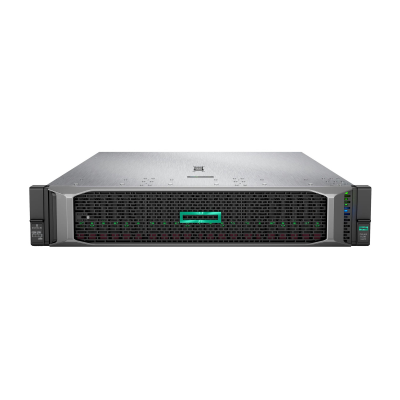
The DL385 Gen10 pairs HPE's 2U chassis with AMD EPYC 7001 and 7002 series processors, giving up to 64 cores per socket and the PCIe lane count to support dense storage or GPU add-ins without stepping up to a 4U platform. It's a common choice where core density and memory bandwidth matter more than raw clock speed.
At a glance
Typical deployments
Virtualisation hosts
Prioritise DIMM count and per-socket core count over clock speed — VM density is usually capped by memory long before CPU, and EPYC's high channel count helps here.
Database servers
Fewer, faster cores often make more sense than maximum core count, since per-core software licensing can outweigh the benefit of extra threads.
Storage or backup targets
Look for units configured with the higher-bay backplanes and a capable HBA or RAID controller; CPU requirements are typically modest for this role.
General-purpose application hosts
A balanced mid-range EPYC configuration with moderate memory usually covers mixed workloads without overspending on either end.
Why buy from Compuwyze
- Tested and configured DL385 Gen10 units, not blind pulls from a pallet
- 12-month warranty on every server we sell
- Clear listings showing processor, memory and drive bay configuration before you buy
- Advice available on suitable memory, storage and NIC upgrades for the platform
- Enterprise stock sourced for reliability, not just lowest price
- UK-based stock and support
FAQs
What does "refurbished" mean for these servers?
Each unit is tested and checked before sale so it's confirmed working and correctly configured, rather than sold as-is from decommissioned stock.
Are these servers suitable for production use?
Yes, the DL385 Gen10 is widely used in production environments. As with any server, match the configuration — memory, drives, redundancy — to the criticality of the workload.
What's included with the server?
Included items are listed on each product page, as configurations vary — check drive caddies, rail kits and power supplies against your requirements before ordering.
Can I upgrade memory or drives later?
Yes. The DL385 Gen10's DIMM slots and drive bays support further expansion, so buying a lower spec and upgrading as needs grow is a practical route for many buyers.
Can you help me choose the right configuration?
Get in touch with your workload details — virtualisation, database, storage or general-purpose — and we can point you to a suitable processor, memory and drive combination.